Tuesday, 6 May 2014

Article - Reading Skills: Scanning vs. Skimming by Stacy Alleyne

There are many reading strategies that help readers better comprehend information. Two that help them to read faster are scanning and skimming. While the two terms may seem synonymous at first glance, they are two distinctly different procedures that good readers use to help them comprehend written material quickly and accurately. Many times it becomes necessary to cover large amounts of reading material in a short period of time. Scanning and skimming help us to do that and depending on what we need to gain from the text, we choose to either scan or skim the information.

Scanning versus Skimming

Scanning information involves a cursory glance over the text features of a book, article or other written material, while skimming is a more in-depth procedure. Skimming involves trying to get the gist of printed information by quickly reading the subjects, verbs, topic sentences, headings and conclusions of paragraphs. In a nutshell, scanning is a more superficial assessment of written material; skimming is slightly more involved. For example, if you are given an article on SAT prep and you want to learn whether hiring a private tutor is better than taking a course, you might just scan the article for the words "tutor" and "course," and read the sentences that deal with that. But, if you were to skim that same article you might try to get the sense of the entire article by reading the introduction, topic sentences and conclusion very quickly.

When to Scan

When you have a specific question or piece of information you’re looking for, it's better to scan. When you’re scanning, you usually are looking for a specific piece of information or have a question you need answered by a piece of text. To scan information, we normally look for text features that jump out from the page without reading everything that’s written.

When Skimming is Better

To get the gist of written material, we use a form of accelerated reading called skimming. Skimming is something readers do when they either don’t have a lot of time for a deeper reading or their interest is low but they still need to know what is being said in a particular piece of writing. Both skimming and scanning are accelerated forms of reading that allow readers to access written information in a quick and accurate way.

When to Skim or Scan

Deciding whether to skim or scan depends on what the purpose of your reading is. Usually, it’s best to thoroughly read material that you need to retain a long time. If you’re studying the history of the Roman Empire, you don’t want to skim your textbook the very first time you encounter the material. After you have done an in-depth reading and become familiar with the material and the subject matter over time and you are presented with new material on the same subject matter, skimming or scanning becomes effective.

About the Author

Stacy Alleyne is a certified English teacher with a BA in English and graduate work in English, education, journalism and law. She has written numerous articles and her own dining column for the "Gazette."

How to Hear English Everywhere

Two simple definitions

  • to hear: to receive sound with the ears
  • to listen: to try to hear
You are very good at languages. That's obvious, because you already speak one language very well - your own! And if you can learn and speak one language well, then you can certainly learn and speak one or more other languages.

But did you ever ask yourself: "How did I learn my own language?" In fact, you never really "learned" it at all - you just started speaking it. One day, when you were about two or three years old, you started speaking your language. A few words at first, not full sentences. But you spoke. And very soon you made progress without even thinking about it. It was like magic!

But it wasn't magic. It was the result of hearing. For two to three years before you spoke, you heard people speaking your language all day, and maybe all night. You heard people speaking your language. Maybe you listened to people, but more importantly you heard. them. Then, as if by magic, you started to speak. All that hearing was necessary for you to start speaking. For two to three years words went IN to your head. Then words came OUT of your head! That is why hearing (and listening to) English as much as possible is so important to you now. The more English you put in, the more you'll get out!
So how can you hear a lot of English when you're not in an English-speaking country or family? Fortunately, there are many ways of hearing English in almost all countries of the world.

Radio

You can receive English language radio in most countries. Two of the best international networks are the BBC World Service and Voice of America. Both of them have special programmes for learners of English. You can find information about times and frequencies for your country on their web sites. Click here for links to radio stations.

Television

TV is an excellent resource for hearing and listening to English. The pictures help you understand what is being said. If you don't have access to English-language TV, you may be able to watch TV on Internet.

Internet

It is now a lot easier to hear English by Internet. If you're reading this at your computer, you can probably listen to some English-language radio news right now, without even moving! To be able to listen to radio on the Internet, you'll need to have special software called a "player" installed in your computer. Most sites work with two players - the RealPlayer from RealNetworks and the Windows Media Player from Microsoft. Don't worry. Both these players are free and you may already have them installed on your computer.

Music/songs

Songs in English are everywhere, even on foreign-language radio and TV stations. Listen to them often. Buy some cassettes or CDs, or make recordings, and try to write the words for an entire song. But choose one that is not too difficult. That means it should be reasonably slow, and with real words sung clearly. Some pop songs are very unclear and are difficult even for native English-speakers to understand fully!

Cinema

Outside the English-speaking world, many large cities have cinemas that show films in English, usually with sub-titles. Make it a habit to go to these films. If you need to read the sub-titles, at least you'll be hearing English even if you don't understand it.

Video

Video has one really great advantage. You can play it again . . . and again. You can use video to watch film cassettes that you buy or borrow. If there are sub-titles, you can cover them with paper (which you can remove if you really don't understand after listening several times). And you can use video to record programmes from television and then watch them several times to improve your understanding.

Friends

Try to make friends with English-speaking people so that you can practise your English through conversation. Of course, this will practise your speaking as well as your listening. And if you don't have a lot of time to go out and meet people, at least you can chat a little by telephone.

Finally, don't worry if you don't understand everything you hear. Hearing comes first! Understanding comes next!

English Language National Exam in Indonesian Senior High School / Vocational High School 2012

Hello Dreamers! Do you want to know what I did listen during National Examination / My Final Test in my Senior Year? If you want to read the transcript and listens to it then click the link below:

Listening Section Transcript UN Bahasa Inggris SMA 2012


English Listening Practice with Subtitles

In this English listening practice video, you will first of all learn some important vocabulary which you will need for the exercise. He will then give you the questions before playing you the listening exercise. The accent is a British English accent and it will help you practice for various tests such as the IELTS and TOEFL tests.

The video has subtitles / closed captions in English and He will show you a transcript of the article after He have given you the answers.

Please leave a comment or ask any questions :)

Andrew,
Crown Academy of English


English listening practice with subtitles

Listening for TOEFL, TOEIC, Listening Exercises, and many more about English Test

Spent too much money on TOEFL / TOEIC and you are still failed the test? Improve your listening skills to learn English language? English Test is the place where you should be at now! English Test is an online site which is concentrates on practice your listening skills for TOELF / TOEIC and listens to basic / daily conversations in English. For FREE of course. English Test also provides other sections, Speaking; Grammar; Dictionaries and etc. Visit them at:

English Test.Net

The Best Writing Apps for Android

People do have smartphone and carries it wherever they go. It can be used as multimedia, read e-books, self camera and also write a memo / reminder in a smartphone. Here are some recommendations from me for Writing Apps for Android:

SolidNote and mNote

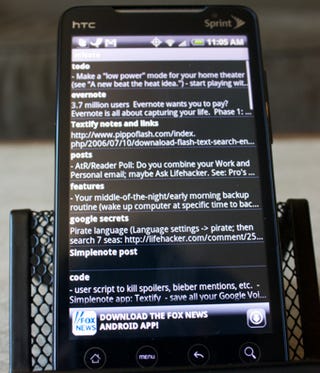
The Best Writing Apps for AndroidSEXPANDThe auto-saving, synced-everywhere Simplenote service has become a mainstay of Lifehacker thinking, and for good reason. It's available pretty much everywhere, it's scaled down to ultimate simplicity, and it's constantly saving your work so you don't have to. It's what Adam calls the Holy Grail of ubiquitous text capture. Two Android clients provide the best Simplenote experience. This author prefers the paid ($2.37-ish) SolidNote, but only because of the slight polish on the controls and seemingly less lag during typing. mNote, a free alternative, does just as fine a job of simply displaying and saving your Simplenote stuff, and maybe you won't experience the same lag.

Thinking Space

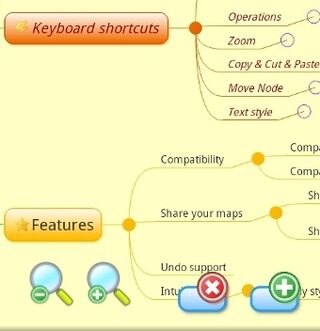
The Best Writing Apps for AndroidSEXPANDSome writers like to hit the page early and often, pounding out a very rough first draft, then editing it again and again. Others have ideas they need to map out, even if only the most rudimentary form. For the latter crew, there's Thinking Space, a mind mapping app for Android that makes it easy to piece together disparate ideas and pull them out later in convenient forms—image files, emailed, however you need them.


AK Notepad

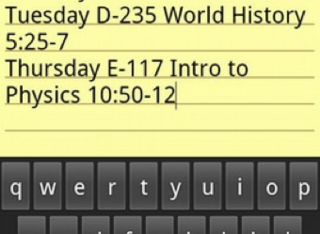
The Best Writing Apps for AndroidSEXPANDIf Simplenote syncing isn't your thing, and if you're a fan of the yellow-legal-ruled style of the iPhone's Notes application, AK Notepad is probably just what you need. It's a simple note client, but it also lets those notes work in and around your phone. Set reminders on notes to ping you later, pin a specific note to your Android home screen, tag your notes for search, and back them up to your SD card or to Catch.com, the maker of another app on this list.


Evernote and Springpad

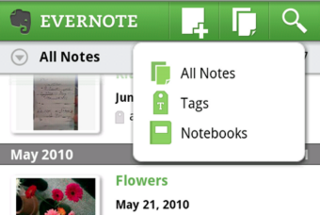
The Best Writing Apps for AndroidSEXPANDMore than words can go into a piece of text. Images, dictated notes, web links, and more can be pieces of the puzzle. Evernote is the more established universal capture tool that syncs to nearly every computing platform available, and its Android client just went through a major overhaul that makes it a very viable tool. But we've also dug howSpringpad popped up while Evernote was still getting its Android footing, providing a nicely different alternative. Both tools are free, and make your Android smartphone into a kind of secretary that follows you around everywhere, waiting to hear your latest thoughts that should end up inside your work.

DroidRoom

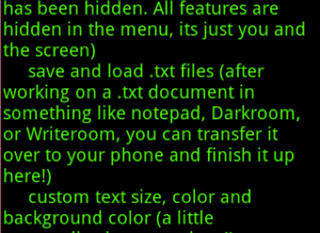
The Best Writing Apps for AndroidSEXPANDIf you're a fan of WriteRoomDark Room, or similar green-terminal-text-on-empty-black writing tools, DroidRoom continues the experience on Android. Stripped down and simple by nature, it loads and saves plain text files from the SD card, goes completely full-screen while you're writing (notification bar hidden and all), and offers customization of text and background. It's $1 in the Market.


ColorNote

The Best Writing Apps for AndroidSEXPAND
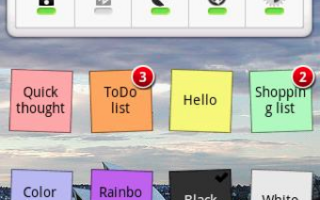
Sticky notes are not a productivity tool. When you see them stacked up on a monitor, it's discouraging. But on a smartphone screen? They can be a simple reminder. Paste your quick thoughts somewhere conspicuous with ColorNote—right under your Twitter client link, perhaps?—and you'll hopefully remember that a first draft is due, to email that person with a question, or whatever else you need to get your words done.

Among all the apps above, I am seriously and highly recommended Color Notes and Thinking Space

Cr: LifeHacker.Com - lifehacker.com/5687096/the-best-writing-apps-for-android

Writer's Block

Have you ever read an on-going story on books or online? Sometimes the author got a writers' block. What is the actual meaning of writers' block? Why do they encounters such a situation? What will the writers do to overcome their writers' block? In this passage you will read an article below and you will read it in author's Point of View.

Symptoms and Cures for Writer's Block

Summary: Help in overcoming writer's block and a short series of exercises to get you writing.
Contributors: Sean M. Conrey, Allen Brizee

Because writers have various ways of writing, a variety of things can cause a writer to experience anxiety, and sometimes this anxiety leads to writer's block. Often a solution can be found by speaking with your instructor (if you are in school), or a writing tutor. There are some common causes of writer's block, however, and when you are blocked, consider these causes and try the strategies that sound most promising:

Symptom

You have attempted to begin a paper without doing any preliminary work such as brainstorming or outlining...

Possible Cures

  • Use invention strategies suggested by a tutor or teacher
  • Write down all the primary ideas you'd like to express and then fill in each with the smaller ideas that make up each primary idea. This can easily be converted into anoutline

Symptom

You have chosen or been assigned a topic which bores you....

Possible Cures

  • Choose a particular aspect of the topic you are interested in (if the writing situation will allow it...i.e. if the goal of your writing can be adjusted and is not given to you specifically, or if the teacher or project coordinator will allow it)
  • Talk to a tutor about how you can personalize a topic to make it more interesting

Symptom

You don't want to spend time writing or don't understand the assignment...

Possible Cures

  • Resign yourself to the fact that you have to write
  • Find out what is expected of you (consult a teacher, textbook, student, tutor, or project coordinator)
  • Look at some of the strategies for writing anxiety listed below

Symptom

You are anxious about writing the paper...

Possible Cures

  • Focus your energy by rehearsing the task in your head.
  • Consciously stop the non-productive comments running through your head by replacing them with productive ones.
  • If you have some "rituals" for writing success (chewing gum, listening to jazz etc.), use them.

Symptom

You are so stressed out you can't seem to put a word on the page...

Possible Cures

  • Stretch! If you can't stand up, stretch as many muscle groups as possible while staying seated.
  • Try tensing and releasing various muscle groups. Starting from your toes, tense up for perhaps five to ten seconds and then let go. Relax and then go on to another muscle group.
  • Breathe deeply. Close your eyes; then, fill your chest cavity slowly by taking four of five short deep breaths. Hold each breath until it hurts, and then let it out slowly.
  • Use a calming word or mental image to focus on while relaxing. If you choose a word, be careful not to use an imperative. Don't command yourself to "Calm down!" or "Relax!"

Symptom

You're self-conscious about your writing, you may have trouble getting started. So, if you're preoccupied with the idea that you have to write about a subject and feel you probably won't express yourself well...

Possible Cures

  • Talk over the subject with a friend or tutor.
  • assure yourself that the first draft doesn't have to be a work of genius, it is something to work with.
  • Force yourself to write down something, however poorly worded, that approximates your thought (you can revise this later) and go on with the next idea.
  • Break the task up into steps. Meet the general purpose first, and then flesh out the more specific aspects later.
  • Try one of the strategies on the next page of this resource.

Dreamers... Never again to be mad to the authors' about writers' block, I uploaded this passage is to make you all realize the hardships of the authors' they're human too just like us. Anyone wants to be an author in the future? Make sure to read this blog post one by one, because this is one of the risks that you'll take later to be an author.

Cr: 20OWL Purdue University - Online Writing Lab https://owl.english.purdue.edu/owl/resource/567/01/
Dictionary
  • english
  • English Dictionary

Double click on any word on the page or type a word: